
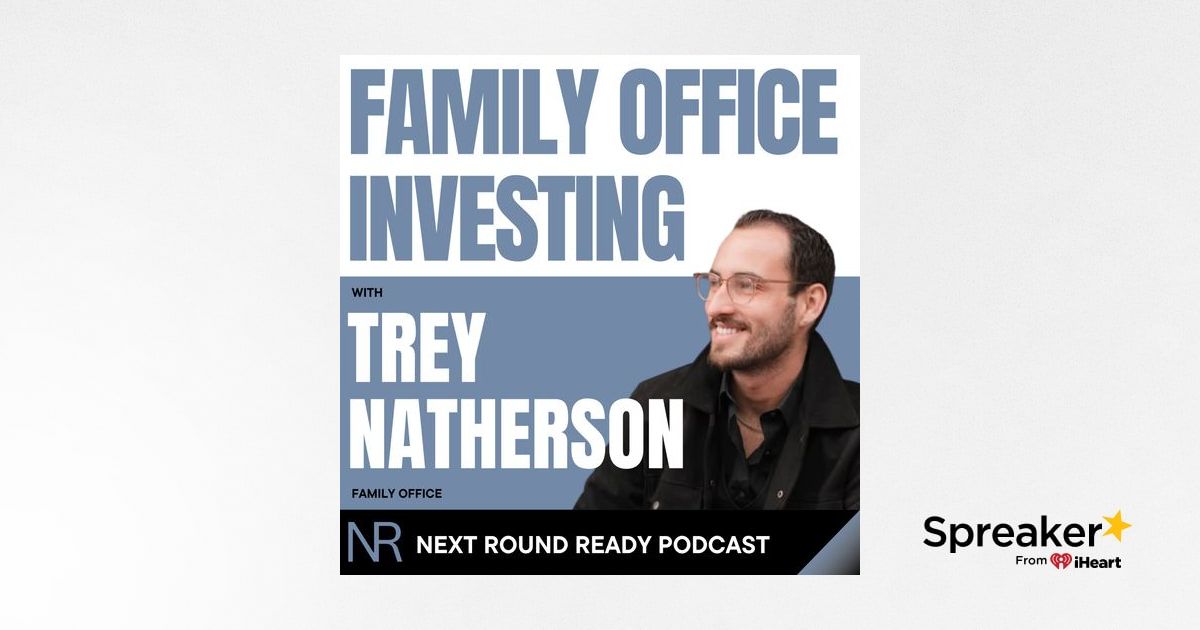
In the ever-evolving landscape of entrepreneurship, the relationship between founders and investors is paramount. In a recent episode of the podcast "Next Round Ready," host Chris engages with investor Trey Natherson, who shares his unique perspective shaped by his family's legacy and his own entrepreneurial journey. This blog post delves into the key insights from their conversation, highlighting what modern investors seek in founders and the evolving dynamics of startup funding.
The Unique Position of Family Office Investing
Trey Natherson represents a distinct breed of investor, operating from a family office that spans three generations of wealth. This background not only provides financial resources but also a rich tapestry of entrepreneurial experience. Unlike many investors who come from corporate backgrounds or previous exits, Trey has been a serial entrepreneur himself, which gives him a unique lens through which he evaluates new opportunities. His journey emphasizes the importance of understanding the founder's experience and motivations, which can significantly influence investment decisions.
The Importance of Problem-Solving Founders
Trey emphasizes that successful entrepreneurs are often those who are driven by a desire to solve specific problems rather than merely chasing financial gains. He notes, "The money is a side product. It's not even the main goal." This mindset resonates with his own experience, as he prioritizes founders who exhibit grit and determination to overcome challenges. He believes that founders who are motivated by passion and purpose are more likely to succeed in the long run, as they are inherently invested in the solutions they create.

The Shift Away from Traditional Metrics
One of the most intriguing points made by Trey is the diminishing importance of traditional metrics such as prestigious educational backgrounds. He shares, "I personally never ask any founder where they graduated from school. I don't care." This reflects a broader shift in the investment community, where street-smarts and real-world problem-solving skills are valued over academic credentials. Trey believes that founders who have navigated challenges on their own, learning to code or bootstrap their startups, often possess the resilience needed for entrepreneurial success.
Red Flags for Investors
Trey outlines several red flags that can deter him from investing in a startup. One significant concern is when a founder expresses a desire to pursue an IPO too early in their journey. He points out that the odds of a startup going public are slim and that early-stage founders should focus on product-market fit and validation instead. Additionally, he stresses the importance of realistic market assessments, as overestimating total addressable market can indicate a lack of research and understanding.
The Role of Market Validation
For Trey, market validation is critical. He advises founders to seek proof that their product or service is needed, whether through waitlists, customer feedback, or early sales. "If you have a massive valuation and you haven't even tested the validation of what you're trying to do, that's a problem," he states. This underscores the necessity for founders to engage with their target audience early on, which can significantly enhance their chances of securing funding.
The conversation with Trey Natherson sheds light on the evolving landscape of investment and what modern investors are looking for in founders. The emphasis on problem-solving, real-world experience, and market validation is reshaping the dynamics between entrepreneurs and investors. As the startup ecosystem continues to grow, understanding these nuances can empower founders to navigate fundraising successfully.
Key Takeaways:
Investors like Trey Natherson prioritize founders who are motivated by problem-solving rather than financial gain.
Traditional metrics such as educational backgrounds are becoming less relevant in investment decisions.
Market validation and proof of concept are critical for attracting investment.
Founders should focus on building relationships with investors based on shared values and experiences.